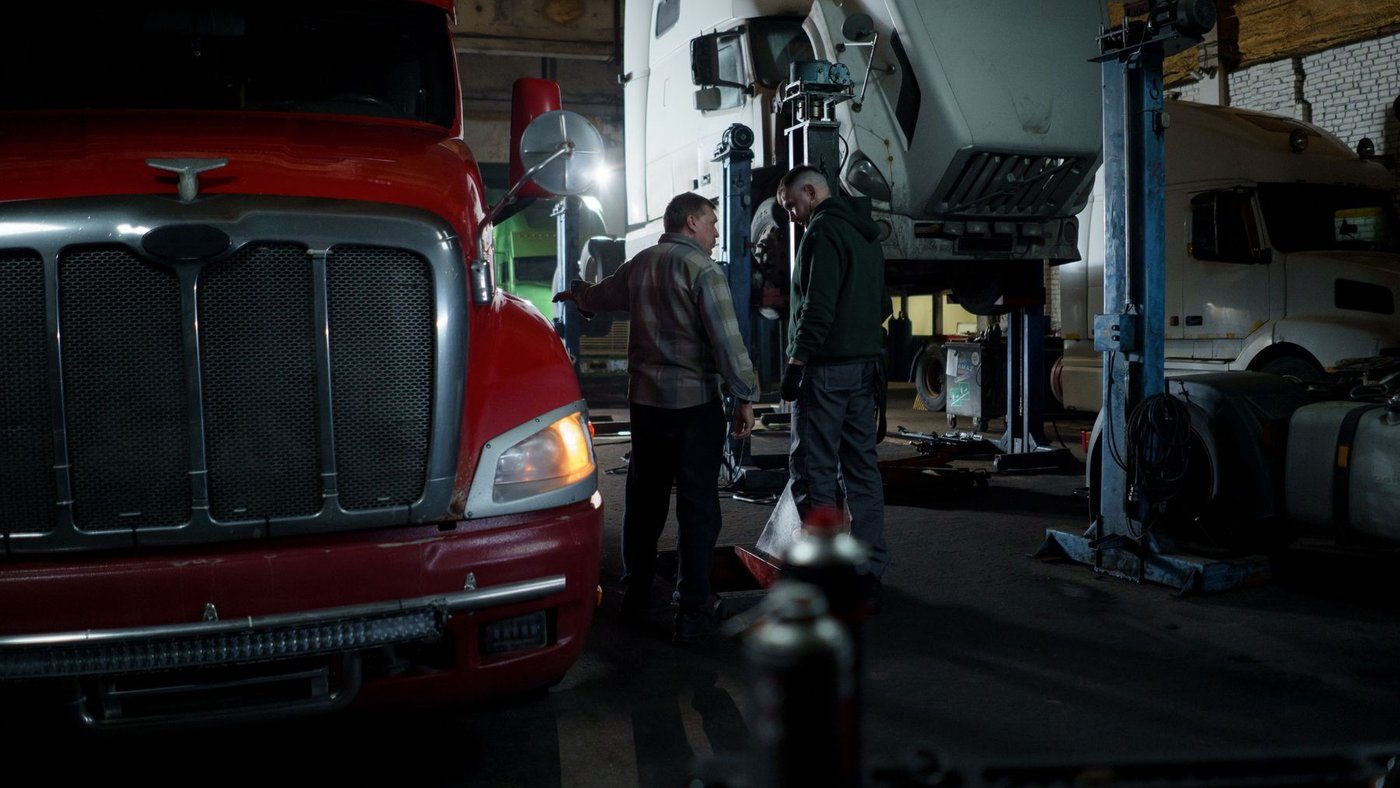
A vehicle in a workshop earns nothing. A vehicle that fails mid-route
costs considerably more than nothing — recovery, a missed delivery, and sometimes the
load.
Three maintenance strategies
- Reactive. Fix it when it breaks. Cheapest per intervention,
most expensive per year, and the failures happen at the worst possible moment by
definition.
- Preventive. Service on a fixed calendar. Better, but it ignores
how hard each vehicle actually worked — so light users get over-serviced and heavy
users still fail.
- Predictive. Service against real usage and observed condition.
More setup, materially better economics.
Measure usage, not time
Road vehicles should be scheduled on distance driven. Plant, generators and anything
that runs stationary should be scheduled on engine hours — a generator can
accumulate a service interval without moving a metre, and a calendar will never
notice.
This single change usually removes the majority of "unexplained" failures in mixed
fleets, because it stops treating an excavator like a delivery van.
Early-warning signals you already collect
Tracking data contains leading indicators before anything fails outright: fuel
consumption drifting upward on an unchanged route, idle time climbing, harsh-braking
counts rising on one vehicle (often brakes rather than the driver), and battery
voltage sagging. None of these are diagnostics. All of them are reasons to inspect.
Making the schedule run itself
The maintenance module should hold each vehicle's service intervals and current
usage, and issue a reminder before the vehicle is overdue rather than after. If a
human has to remember to check, the system will hold for about six weeks.
The number to watch
Track the ratio of planned to unplanned workshop visits. That single figure tells you
whether the programme is working, and it is far harder to argue with than a
satisfaction survey. Vehicle availability — the percentage of the fleet ready to work
on any given morning — is the figure to report upward.