
How extensive reporting uncovers the fleet utilisation you’re missing
Most fleets are bigger than they need to be, and cannot prove it. Where utilisation quietly leaks away, and the reports that bring it back into view.
Read moreFuel
An idling engine burns fuel while producing zero kilometres of useful work. Why the waste stays hidden, and what it takes to measure it honestly.
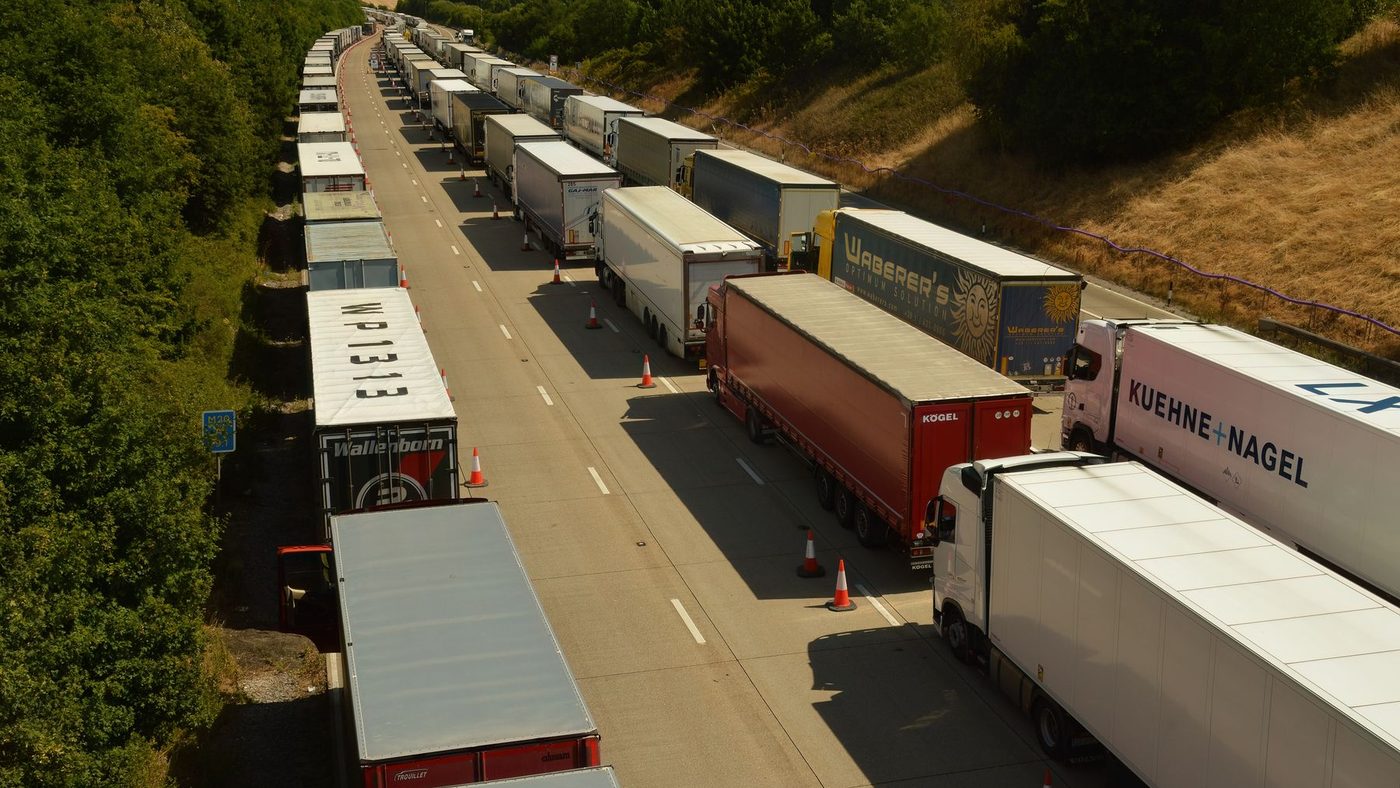
Every fleet loses money to engines that run without moving a vehicle forward, and for most operators the true scale of the waste stays hidden until someone measures it properly. This article looks at why idling adds up so quickly, what makes it difficult to catch through manual methods, and how the right detection technology turns a quiet cost into a manageable one.
Idling feels harmless in the moment. A driver waits at a loading dock, sits through a traffic signal, or keeps the engine running for air conditioning during a break. None of this looks like a problem on its own. Added up across a full working day, and then across an entire fleet, it becomes one of the largest avoidable expenses a transport or logistics business carries.
Government transportation research in the United States, including work by the Department of Energy and Argonne National Laboratory, has estimated that heavy duty vehicles can consume close to a gallon of fuel for every hour spent idling, and that idling across the commercial vehicle sector wastes over a billion gallons of fuel annually at a cost running into billions of dollars. The exact figures shift depending on vehicle type, engine size, and climate, but the pattern holds everywhere: an idling engine burns fuel while producing zero kilometres of useful work. For a fleet operating across Pakistan, where long waiting periods at ports, warehouses, and toll points are common, and where air conditioning runs for much of the year, the exposure is significant.
A few common patterns explain why idling costs escalate without anyone noticing:
Traffic and loading delays. Vehicles moving between Karachi to Islamabad or navigating congested city routes spend meaningful time stopped with the engine running rather than switched off, simply because drivers expect to move again shortly.
Climate control. In a country where summer temperatures push well above 40 degrees Celsius across much of the year, drivers understandably keep engines running to power air conditioning during breaks, deliveries, and waiting periods.
Driver habit. Switching an engine off and restarting it repeatedly is often seen as inconvenient or unnecessary by drivers, even when the wait is long enough to justify it.
Auxiliary equipment. Refrigerated vehicles, vehicles with onboard equipment, or those running communication devices may idle to keep systems powered, sometimes well beyond what is actually required.
None of these reasons are unusual or careless. That is precisely what makes idling difficult to manage through policy alone. Telling drivers to reduce idling is a reasonable starting point, but without a way to measure actual idling time per vehicle, per route, and per driver, businesses are left guessing at both the scale of the problem and whether any policy is actually working.
Fuel is the most visible cost of idling, but not the only one. An engine running below its intended operating temperature for long stretches burns fuel less efficiently and allows unburned fuel residue to build up within the engine over time, contributing to additional wear. This translates into more frequent maintenance, shorter component life, and higher long-term running costs across a fleet. Extended idling also increases emissions output per kilometre actually driven, a consideration that matters more each year as environmental standards tighten and as businesses face growing pressure to operate responsibly.
Some businesses attempt to estimate idling through driver logs or spot checks. In practice, this rarely produces a usable picture. A driver stopped in traffic looks similar to a driver idling voluntarily, and neither is easy to distinguish from a small amount of GPS positional drift that can make a stationary vehicle appear to be moving slightly, or a moving vehicle appear briefly stationary. Without a system built specifically to separate genuine idle time from these false signals, idling reports tend to either overstate the problem with noise, or understate it by missing genuine cases entirely.
This is precisely the gap that a well-designed GPS tracking and fleet management platform is built to close.
For this facet of NaxerTech’s operations, its Pegasus platform was designed around a straightforward principle: fleet managers should be able to see exactly where fuel is being wasted, without having to manually sift through raw location data or take a driver's word for how long a vehicle sat idle. The following breakdown shows how this works across the platform, the hardware, and the support behind it.
At the core of idle detection is a configurable excess idle threshold, allowing a business to define the minimum idle duration, in minutes, that should count toward reported totals. A short unavoidable stop at a toll booth or signal will not inflate the numbers, while genuinely wasteful idling is captured accurately.
To protect the integrity of this data, the platform applies a movement check that excludes any idle period during which the vehicle shifted more than a small distance from its detected starting position. This filters out the GPS positional drift that can otherwise cause a stationary vehicle to be misread as having moved, keeping idle figures reliable rather than noisy.
For vehicles where idling can be difficult to distinguish from a partial ignition state, an additional exclusion option compares the vehicle's mains voltage readings against an ignition off baseline, helping separate genuine engine idling from edge cases that would otherwise distort the total. Fleet managers who want to review the numbers in more depth can also refer to a dedicated excess idle summary within their reporting, giving a per vehicle view of where idle time is accumulating without needing to interpret raw location logs.
None of this detection is possible without dependable hardware capturing ignition state, voltage, and location consistently in the field. NaxerTech's tracking devices are engineered to maintain accurate readings under the conditions common to Pakistani fleets, from extended hours in high heat to the vibration and power fluctuations typical of long haul and urban delivery routes alike. This consistency in data capture is what allows the software layer to produce idle figures that fleet managers can act on with confidence, rather than treat as a rough estimate.
Fleets operating from Lahore to smaller regional hubs across the country have come to rely on NaxerTech's tracking systems specifically because the reporting reflects what is actually happening on the road, not an approximation of it. This accuracy is a large part of why businesses across logistics, distribution, and field service industries continue to choose NaxerTech as their tracking partner year after year, rather than switching between providers in search of a better fit.
Every NaxerTech device is fully PTA compliant, giving fleet owners confidence that their tracking hardware meets national regulatory standards without any additional effort on their part. Configuring idle thresholds correctly for a specific fleet, whether that means adjusting for a particular route, vehicle type, or shift pattern, is supported by a genuinely round the clock customer support team, reachable through an always active call centre whenever assistance is needed. Installation is included in the purchase price at no additional charge, meaning fleets can move from decision to working idle detection without unexpected setup costs along the way.
For fleets operating across Pakistan, from major hubs to smaller service areas, the combination of accurate detection, reliable hardware, and dependable support means idling no longer has to remain an invisible cost. It becomes a number on a report, and a number that can be brought down.
Keep reading
Most fleets are bigger than they need to be, and cannot prove it. Where utilisation quietly leaks away, and the reports that bring it back into view.
Read more
Cash-in-transit vehicles and financed vehicles sitting on a loan book are two very different forms of exposure. Tracking addresses both.
Read more
The criteria that actually decide whether a tracking deployment succeeds — and the ones that look important in a demo but stop mattering by month three.
Read moreTalk to our team about the right tracker, the right package and a live walkthrough of Pegasus — no obligation.