Why Pakistani businesses trust NaxerTech over the alternatives
Trust is earned long before the first tracker is fitted. The questions fleet owners ask, and the answers that separate a vendor from a partner.
Read morePlatform
Almost every provider shows you a map. The difference arrives months later, when you need a report that does not exist yet — and that answer depends on who wrote the software.
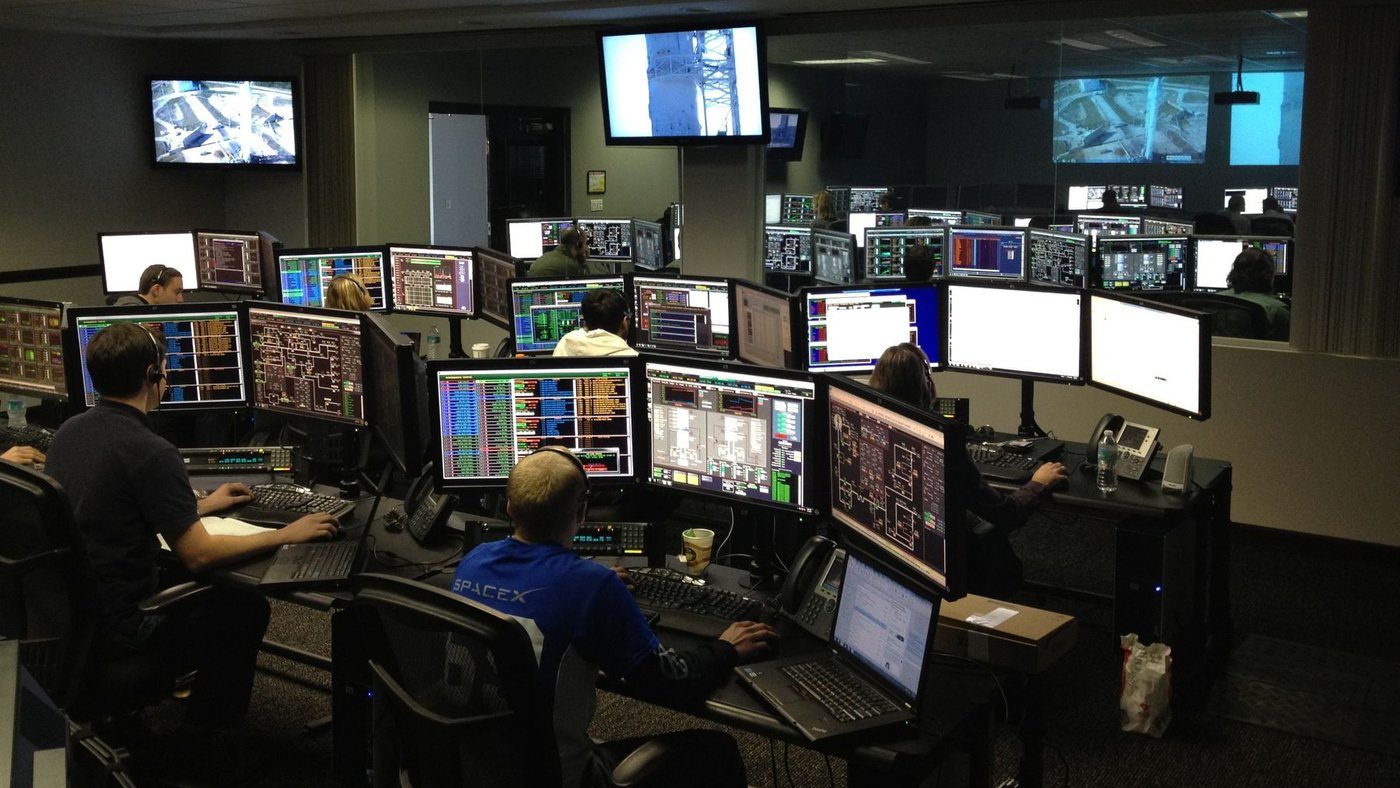
Almost every tracking company in the market shows you a map with your vehicles on it. The difference between providers is rarely the map. It is what happens in the months afterwards, when you need a report that does not exist yet, a rule nobody anticipated, or a connection into a system the vendor has never heard of. This article explains what Pegasus is, and why owning the software rather than licensing it changes the answer to all three.
A large share of fleet tracking providers, in Pakistan and elsewhere, do not write the software they sell. They buy a white-label platform from a third party, apply their own logo, and resell it with hardware and a support contract. There is nothing dishonest about this arrangement, and for a customer with straightforward requirements it can work perfectly well.
The limitation appears the moment your requirement steps outside what the original vendor imagined. A reseller cannot add a field to a report, change how an alert is evaluated, or expose a new endpoint in an API, because they do not have the source code. The honest answer they can give you is that they have raised a request with the platform owner. Whether it is ever built, and on what timescale, is outside their control and outside yours.
Pegasus is our own platform. We wrote it, we maintain it, and the engineers who built it work for the same company that installs your trackers. When the answer to a request is no, it is a decision rather than a limitation.
Pegasus is entirely web based. There is nothing to install, and a dispatcher can be productive in the interface on the first day rather than after a fortnight of training. Underneath that surface, the platform is organised around a handful of capabilities that most fleets end up using daily.
Rights and group management. Separate accounts, groups and sub-groups with multi-layer security, so each user sees exactly the vehicles their role requires and nothing beyond it. For a business running several depots, or a parent company overseeing subsidiaries, this is usually the first thing configured and the last thing anyone thinks about again.
The alert notification engine. Rather than a fixed list of alerts to switch on and off, Pegasus lets you compose conditional rules and route each one to a phone call, an SMS, an email or an in-app popup. The routing matters as much as the rule: a geofence breach at two in the morning needs to reach a person, not an inbox.
Dashboards. A fleet dashboard and a POI overstay dashboard, both exportable and both designed to hold up on a wall-mounted screen in an operations room, not just in a browser tab.
History player. Any journey can be replayed with speed, address and stop data at every point along the track, which is what turns a dispute about a delivery into a question with an answer.
Driver behaviour and identification. Harsh braking, acceleration and speed events tied to a specific identified driver through a biometric reader or a Dallas key, so behaviour data belongs to a person rather than a vehicle.
Vehicle maintenance. Service scheduling and reminders driven by mileage or engine hours, so servicing follows how hard a vehicle has actually worked rather than a date in a calendar.
Offline logger. Data recorded while a vehicle is outside coverage is uploaded once the connection returns. The record has no gaps, which matters more than it sounds when a route crosses areas with patchy signal.
Live positioning tells you where a vehicle is. It does not, by itself, help you when something goes wrong. Pegasus includes a set of controls built for the moment after the alert.
Remote immobilisation is gradual and safety aware rather than an abrupt cut, and can be triggered several ways: through central locking with GSM acknowledgement, from authorised contact numbers over GSM, from the Pegasus web console in the control room, or through the SMS server. Which of those routes a given user may use is itself a permission.
GSM jammer detection is built into the device rather than inferred from missing data. A detection is acknowledged at the control room with a timestamp, and the action that follows is programmable: engine immobilisation, the hooter, or an SMS alert. That choice is a deliberate trade-off between security and convenience, and it is yours to make rather than ours.
Alongside these sit no-go area notifications across every channel, real-time geo tags that can be added from the Android app, POI categories for fuel stations, parking, customers and restaurants, and a find-nearest-vehicle search that turns a dispatch decision into one click.
The reason most tracking deployments quietly fail is not that the technology stops working. It is that nobody logs in after the second month. The map is interesting for a few weeks, then it becomes another tab that never gets opened, and the investment slowly turns into a line item nobody can justify.
Pegasus is built on the opposite assumption. Rather than waiting for someone to pull a report, the platform pushes them out: scheduled daily, weekly or monthly, delivered as Excel, PDF or Word straight to multiple email recipients, with graphs alongside every tabular view. There are more than fifty reports covering trips, fuel, points of interest, maintenance, speed and communication logs, and analysis can run across groups and sub-groups rather than one vehicle at a time.
The practical effect is that the person who needs the number receives it whether or not they remember the platform exists. A fleet manager who has stopped logging in still gets Monday's utilisation summary in their inbox, and that is usually enough to keep the system in daily use.
Tracking data is most valuable where your business already works, which is rarely inside the tracking platform. It belongs in your ERP, your dispatch tool, or the portal your customers log into. Pegasus exposes an SDK and an API for exactly that, and the integration work is something our engineers have done before rather than something they would be attempting for the first time on your project.
This is also where owning the software stops being an abstract advantage. An integration that needs a field the API does not currently return is a development task for our team, not a support ticket forwarded to a vendor in another country.
The case for Pegasus is not that it has features no competitor has. Most established platforms will list broadly similar capabilities, and any of them will show you a vehicle moving on a map. The case is that when your operation asks for something the platform does not do yet, there is a team that can build it, and a commercial relationship in which asking is reasonable.
For fleets across Pakistan running mixed hardware, several depots and their own back-office systems, that difference tends to matter more in year three than it does in week one. It is worth asking any provider you are evaluating a simple question: do you write this software yourselves? The answer shapes everything that follows.
Keep reading
Trust is earned long before the first tracker is fitted. The questions fleet owners ask, and the answers that separate a vendor from a partner.
Read more
The criteria that actually decide whether a tracking deployment succeeds — and the ones that look important in a demo but stop mattering by month three.
Read more
Most fleets are bigger than they need to be, and cannot prove it. Where utilisation quietly leaks away, and the reports that bring it back into view.
Read moreTalk to our team about the right tracker, the right package and a live walkthrough of Pegasus — no obligation.