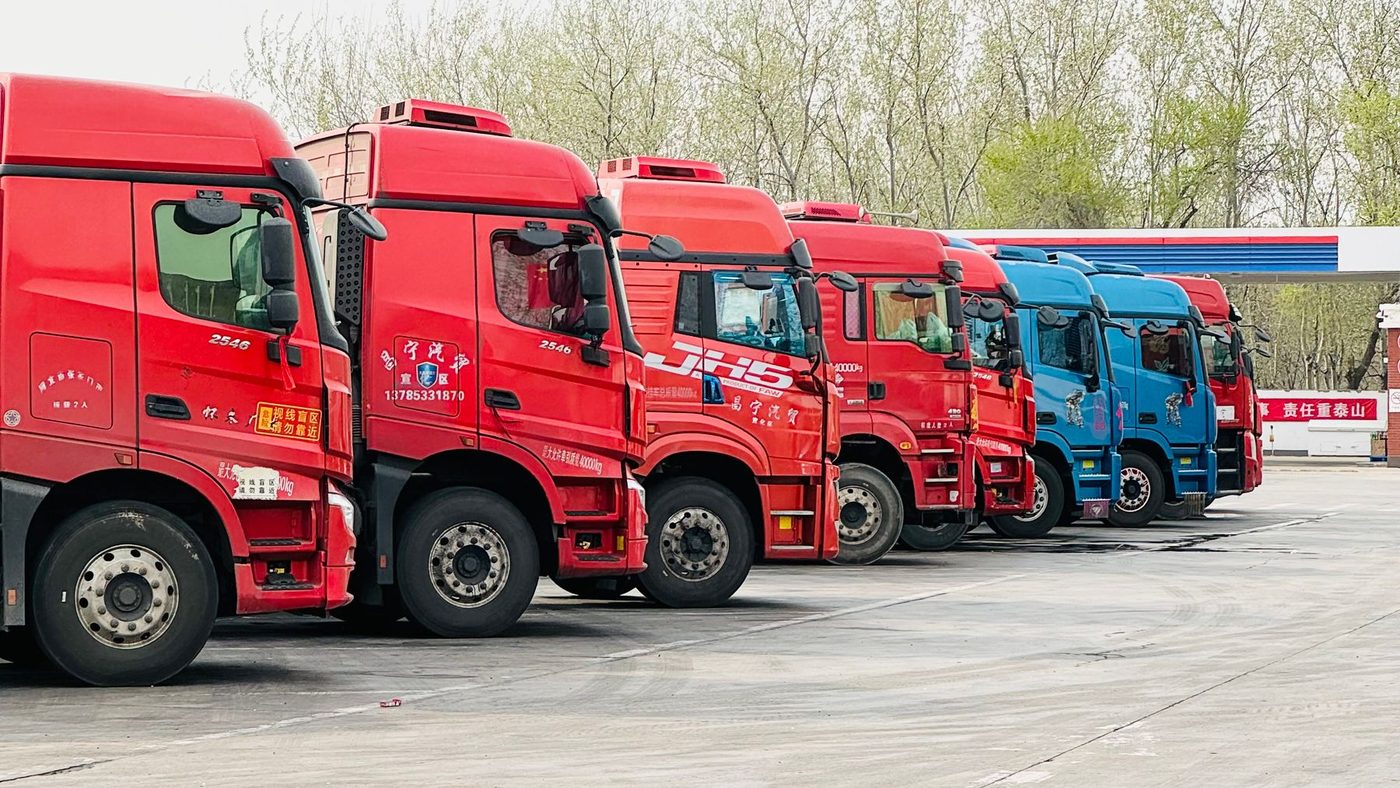
Fleet management 101: what every business owner in Pakistan should know
The six pillars every fleet runs on — tracking, fuel, driver behaviour, maintenance, compliance and reporting — and why informal methods stop scaling.
Read moreGPS Tracking
Satellites, SIM cards and servers — what actually happens between a vehicle moving and a dot appearing on your screen, explained without the jargon.

GPS vehicle tracking has become a standard tool for fleet owners across Pakistan, from small delivery operations in Lahore to large logistics fleets moving goods between Karachi, Islamabad, and cities further afield. For business owners considering this technology for the first time, understanding how it actually works, from satellite positioning to real time data transmission, makes it far easier to evaluate providers and set realistic expectations. This blog walks through the core technology, what a typical monitoring platform offers, and the questions worth asking before choosing a system
GPS vehicle tracking relies on three components working together: a tracking device installed in the vehicle, a network of satellites that determine location, and a software platform that presents this information to the fleet owner.
The tracking device communicates with satellites orbiting the earth to calculate its exact position. This process, known as satellite positioning, is the same underlying technology used by navigation systems in smartphones and vehicles worldwide. The device then transmits this location data over the mobile network to a central server, where it is processed and made available through a dashboard or mobile application.
In practical terms, this means a business owner in Lahore can view the real time location of a vehicle operating in Multan or Peshawar without any direct communication with the driver.
The tracking device receives signals from multiple satellites simultaneously. Each signal carries information about the time it was transmitted and the satellite’s position at that moment. By calculating the time delay across several satellite signals, the device determines its precise location on the ground.
For this process to function accurately, the device requires a reasonably clear line of sight to the sky. Installation quality therefore has a direct bearing on tracking accuracy, particularly in dense urban environments such as Karachi, where tall structures can occasionally affect signal reception.
Once the device establishes its location, this information must be relayed to the fleet owner. This is accomplished through the mobile network, using a SIM card embedded within the tracking device. Location data is transmitted at set intervals and processed by a central platform, which then presents it in an accessible format.
Mobile network coverage across Pakistan has expanded considerably in recent years, extending reliable connectivity to smaller cities and towns including Gujranwala, Sargodha, Sahiwal, and Sukkur. This expansion has made fleet tracking a practical option for businesses operating well beyond major metropolitan centres.
A properly implemented tracking system provides several categories of information beyond a live map view.
Real time location. Continuous visibility into the current position of each vehicle in the fleet.
Historical route data. A record of a vehicle’s movement over a given period, useful for verifying deliveries, reviewing routes taken, and resolving discrepancies with customers or clients.
Speed monitoring. Data on vehicle speed, which forms the basis for broader driver behaviour analysis on more comprehensive platforms.
Geofencing. The ability to define a virtual boundary around a specific location, such as a warehouse in Islamabad or a client site in Faisalabad, with automatic alerts generated when a vehicle enters or exits that area.
Idle and stop reporting. Detailed records of how long vehicles remain stationary or idling, information that often reveals inefficiencies fleet owners had not previously measured.
For a business operating a single vehicle, informal monitoring may be sufficient. Once a fleet grows beyond a handful of vehicles, however, informal methods become impractical. A dispatcher based in Lahore has no reliable way of confirming whether a driver in Sialkot followed the assigned route, and a business owner cannot manually verify that multiple vehicles completed their scheduled stops across a working day.
GPS tracking addresses this gap by replacing assumption with data. Fleet owners are able to base operational decisions on verified information rather than driver reports, which has implications for route planning, fuel management, and overall accountability within the organisation.
A number of misconceptions persist among business owners evaluating this technology for the first time.
One common concern is that tracking systems primarily serve to monitor drivers with suspicion, which may affect morale. In practice, fleets that adopt tracking systems typically report the opposite outcome. Drivers operate with greater consistency when they understand that routes and driving behaviour are recorded, and disputes regarding timing or routing are resolved through data rather than disagreement. Well performing drivers are, in most cases, positively distinguished by this visibility rather than disadvantaged by it.
A second concern relates to network coverage outside major cities. This was a legitimate limitation in earlier years, but mobile connectivity across Pakistan, including areas such as Jhang, Khushab, and Hyderabad, has improved substantially. Most current tracking devices also retain data locally during temporary network interruptions and transmit it once connectivity is restored, minimising data loss even in areas with inconsistent coverage.
A third assumption is that tracking systems are only relevant for large fleets. In reality, issues such as fuel discrepancies, unauthorised vehicle use, and inefficient routing affect businesses of all sizes. A small fleet operating three or four vehicles out of Attock can experience proportionally significant losses from these issues, making the case for tracking relevant regardless of fleet size.
For fleet owners beginning this evaluation process, several factors merit particular attention.
The platform should provide both live tracking and comprehensive historical data, rather than a live map alone. Geofencing and automated alert capabilities are important, as they reduce the need for continuous manual monitoring. The quality of installation and ongoing technical support should be assessed carefully, since a device that fails to report data reliably undermines the value of the system entirely. Finally, mobile application access is essential, given that most fleet owners and dispatchers require the ability to review vehicle status while away from a desk.
A clear understanding of how GPS tracking functions, at a technical and operational level, provides a solid foundation for evaluating providers and selecting a system suited to a business’s specific requirements.
NaxerTech has built its platform around the concerns and considerations outlined above. On network reliability, the system is designed to retain data locally during temporary connectivity gaps and sync it once coverage resumes, which supports consistent performance across major cities as well as smaller markets such as Gujranwala, Sahiwal, and Sukkur.
On the question of live tracking versus historical data, the platform provides both as standard, giving fleet owners real time visibility alongside a complete route history for every vehicle. Geofencing and automated alerts are built into the system as well, reducing the need for constant manual monitoring and allowing fleet managers to focus on exceptions rather than routine checks.
Reporting is a core part of the platform rather than an added feature, with a wide range of reports available covering vehicle activity, idle time, and route history, giving fleet owners the depth of data needed to make informed operational decisions. The platform is also accessible through a mobile application, so fleet owners and dispatchers can review vehicle status and respond to alerts without being tied to a desk.
On installation and support, all NaxerTech devices are PTA compliant and installation is included at no additional charge, removing a common point of hesitation for fleet owners weighing upfront costs. Every device comes with a one-year warranty, extended for as long as regular payments continue, and is backed by a genuinely round the clock support team through an always active call centre.
For businesses in Pakistan evaluating GPS tracking for the first time, from Lahore and Karachi to smaller markets across the country, NaxerTech offers a platform built specifically around the practical requirements fleet owners face day to day.
Keep reading
The six pillars every fleet runs on — tracking, fuel, driver behaviour, maintenance, compliance and reporting — and why informal methods stop scaling.
Read more
Rising fuel bills you cannot explain, customers asking where their delivery is, and breakdowns that always arrive as a surprise. The symptoms worth acting on.
Read more
In a country where summer routes run well past 40°C, a two-degree excursion is a written-off consignment. How continuous temperature logging prevents it.
Read moreTalk to our team about the right tracker, the right package and a live walkthrough of Pegasus — no obligation.